- Law enforcement, firefighting, military and aviation roles all permit refractive surgery, but each sets its own vision standards and recovery periods.
- Military applicants must wait six months after laser surgery before their physical examination, and refractive errors cannot exceed +/-8.00 diopters.
- Under FAA guidance, pilots can typically be recertified a minimum of two weeks after LASIK or SMILE, or twelve weeks after PRK, once vision is stable.
- PRK and SMILE are flapless procedures, which makes them popular choices for tactical and physically demanding professions.
- IQ Laser Vision offers eligible first responders, active-duty military and veterans an $1,100 discount for both eyes.
California first responders, aircraft pilots and members of the military have demanding, high-responsibility jobs. It is only natural that rules exist to maintain the required standards, and these rules include vision.
Medical screening confirms that applicants have sufficient visual acuity for the role. Refractive surgery is permitted to correct visual deficiencies, but vision must stabilize before individuals can resume normal duties. The rules and recovery periods vary between roles.
Vision Requirements for California Law Enforcement, Firefighters, and Military
To ensure public safety and optimum performance, personnel must be able to operate effectively in hazardous and low-light conditions. The vision standards differ between professions:
Law Enforcement Officers
- Vision should generally be correctable to 20/20 or 20/30 in each eye.
- For glasses wearers, uncorrected vision cannot be worse than 20/40 to 20/100, depending on the agency, so the officer remains safe without glasses.
- This uncorrected limit is often waived for successful contact lens wearers.
- Color vision must be functional.
- After laser surgery, stable vision must be demonstrated for 3 to 6 months.
Firefighters
- Corrected vision must be 20/20 or 20/30 in each eye.
- Uncorrected vision for glasses wearers cannot be worse than 20/100.
- Contact lenses are preferred to glasses, and the uncorrected limit is waived for contact lens wearers.
- Good color vision is essential.
- Peripheral vision must be at least 110 to 140 degrees of continuous horizontal field.
Military Personnel
- Distance vision must be correctable to 20/40 in each eye, and near vision to 20/40 in the better eye.
- Nearsightedness and farsightedness cannot exceed +/-8.00 diopters.
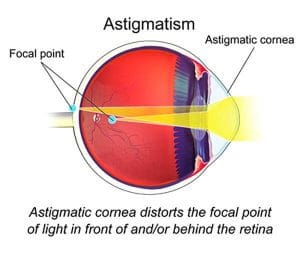
- Astigmatism cannot exceed 3.00 diopters.
- Color blindness can limit job placement.
- Recruits must wait six months after laser surgery before their physical examination.
| Requirement | Law Enforcement | Firefighters | Military |
|---|---|---|---|
| Corrected vision | 20/20 or 20/30 in each eye | 20/20 or 20/30 in each eye | 20/40 in each eye (distance) |
| Uncorrected limit (glasses wearers) | 20/40 to 20/100, by agency | 20/100 | Refractive error within +/-8.00 diopters |
| Color vision | Must be functional | Essential | Deficiency can limit job placement |
| Post-surgery requirement | Stable vision after 3 to 6 months | Stable vision and clearance | Six-month wait before physical exam |
FAA Regulations for Pilots: Post-Refractive Surgery Guidelines and Medical Clearance
The Federal Aviation Administration (FAA) accepts FDA-approved refractive procedures, including LASIK, SMILE and PRK, for visual acuity correction. The FAA’s Guide for Aviation Medical Examiners sets out how pilots are assessed after surgery.
- Uncomplicated surgery three or more months ago: The Aviation Medical Examiner (AME) can issue a medical certificate and simply record the procedure. No follow-up letters are needed.
- Surgery within the past three months: The AME reviews a completed and signed Eyes, Refractive Surgery Status Summary from the pilot’s eye specialist before issuing a certificate.
- After surgery: Pilots must still meet the corrected or uncorrected vision standards. If they do not, corrective lenses must be worn.
- Adverse effects: Complications from surgery will result in denial or deferment until they are resolved.
LASIK, SMILE, or PRK: Which Procedure Meets Strict Service Standards?
All three procedures are widely accepted, provided stringent criteria are met. However, suitability depends on how each procedure treats the cornea:
- PRK (Photorefractive Keratectomy): PRK consistently meets strict service standards. It is a surface procedure in which the outer layer of the cornea is removed and then naturally grows back. Because no corneal flap is created, the eye’s integrity is not affected by trauma or extreme forces. The trade-off is a longer recovery period of 3 to 6 months before medical clearance.
- LASIK (Laser Assisted In Situ Keratomileusis): LASIK creates a thin flap in the corneal surface before reshaping the tissue underneath. Recovery is quick, typically 24 to 48 hours. However, some special forces units discourage LASIK due to the risk of the flap dislodging in high-pressure environments. Bladeless options such as All-Laser Soft Touch Micro LASIK are available for suitable candidates.
- SMILE (Small Incision Lenticule Extraction): SMILE removes corneal tissue through a tiny incision. It retains structural stability and offers rapid healing, but it is the newest of the three procedures and is not yet accepted for all roles.
Every procedure requires stable vision, no side effects and the provision of clinical records after surgery.
Why SMILE and PRK Are Popular Choices for Tactical and Physical Professions
Unlike LASIK, SMILE and PRK are flapless procedures. They are often preferred for people with physically demanding and tactical roles because:
- There is no risk of flap displacement during physical activity.
- The eyes are more resistant to trauma because corneal structural integrity is preserved.
- They are well suited to roles that involve wearing goggles, masks and other protective equipment.
Required Healing Windows and Documentation Before Returning to Duty
The requirements for returning to duty after surgery vary by occupation:
Civil Pilots
A medical certificate can be issued by the Aviation Medical Examiner a minimum of two weeks after LASIK or SMILE, or twelve weeks after PRK. Flying must be discontinued until the eye specialist determines that vision is stable and completes an eye evaluation or refractive surgery status form.
Military Personnel
Military personnel must be combat-ready, so they are generally not deployed for 30 to 45 days after LASIK or SMILE, or for 90 days after PRK. Convalescent leave of 3 to 7 days follows the procedure, and duty restrictions apply for thirty days. A formal medical release is required, together with pre-operative and post-operative documentation.
First Responders
First responders can generally return to light duty within 24 to 48 hours of LASIK or SMILE, or 5 to 7 days after PRK. Return to full duty typically takes 3 to 6 weeks to ensure stability. Post-operative progress reports and clearance forms are required to verify refractive stability and visual acuity standards.
| Role | After LASIK or SMILE | After PRK | Documentation |
|---|---|---|---|
| Civil pilots | Minimum of 2 weeks | Minimum of 12 weeks | Eye evaluation or refractive surgery status form |
| Military personnel | 30 to 45 days before deployment | 90 days before deployment | Formal medical release with pre-op and post-op records |
| First responders | Light duty in 24 to 48 hours; full duty in 3 to 6 weeks | Light duty in 5 to 7 days; full duty in 3 to 6 weeks | Progress reports and clearance forms |
Special First Responder and Military Vision Benefits at IQ Laser Vision
IQ Laser Vision offers first responders and military personnel an $1,100 discount for both eyes on eligible procedures, including LASIK, SMILE, PRK and EVO ICL. The offer applies to active-duty personnel and military veterans, and can be claimed by presenting service identification after scheduling an appointment.
Frequently Asked Questions
Can pilots get LASIK and still fly?
Yes, pilots can have LASIK and continue flying. The FAA accepts FDA-approved refractive procedures, including LASIK, SMILE and PRK. A medical certificate can typically be issued a minimum of two weeks after LASIK or SMILE, or twelve weeks after PRK, once an eye specialist confirms vision is stable and meets FAA standards.
How long after laser eye surgery can you join the military?
Military recruits must generally wait six months after laser eye surgery before their physical examination. Applicants must also meet vision standards, including distance vision correctable to 20/40 in each eye, refractive errors no greater than +/-8.00 diopters and astigmatism no greater than 3.00 diopters, with formal documentation of the procedure.
Which laser eye surgery is best for first responders and military personnel?
PRK and SMILE are often preferred for first responders and military personnel because they are flapless procedures. Without a corneal flap, there is no risk of flap displacement during physical activity, and the cornea retains more structural integrity. PRK consistently meets strict service standards, while SMILE is not yet accepted for every role.
Does IQ Laser Vision offer a military or first responder discount?
Yes, IQ Laser Vision offers an $1,100 discount for both eyes to first responders, active-duty military personnel and military veterans. The discount applies to eligible procedures, including LASIK, SMILE, PRK and EVO ICL, and can be claimed by presenting service identification after scheduling an appointment.