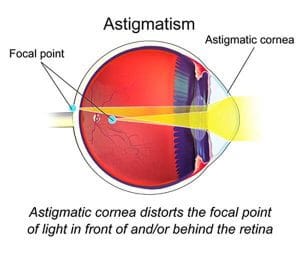
Astigmatism is a common eye condition that affects approximately 1 in 3 people. The condition is mild for most people and typically is just something you’re born with, though it is possible to develop it later in life. Astigmatism causes your lens and/or cornea to be a different shape, think an American football rather than a soccer ball, which means light hits more than one point in the eye.
This causes the light to bend differently as it enters your eye, which can lead to blurry or distorted vision. Many people with astigmatism have no symptoms, so it’s important to have regular eye exams to find out if you have this condition and see if you could benefit from glasses, contact lenses, or corrective laser surgery.
Common astigmatism symptoms include:
- Needing to squint frequently
- Regular headaches and eye strain
- Difficulty seeing clearly at night
- Blurry or distorted vision at various distances
If you experience any of these symptoms, make sure to book an appointment with your optometrist for proper evaluation.
LASIK is popular for astigmatism patients who want to clear blurry vision and stop relying on glasses or contact lenses. The eligibility criteria are much the same as laser eye surgery to remedy other issues. You should be at least 18 and have a stable prescription, meaning there has been little change in the last two years. There is typically a limit to the prescription you can have, usually 6 diopters for astigmatism. You should also have healthy eyes, be in general good health, and not be pregnant or nursing. These guidelines ensure the procedure is safe for you and that you’ll have a smooth recovery.
Should You Have LASIK for Your Astigmatism?
Whether you should have LASIK for your astigmatism is a decision only you can make. However, we can say that laser surgery is your best option for correction, and it offers a high success rate. Glasses and contact lenses help your sight while you wear them, but they don’t cure your astigmatism. LASIK, on the other hand, could reverse your astigmatism so you no longer have to worry about it progressing.
As with any surgery, there are risks such as infection or dry eyes, but it’s considered a safe procedure. It’s also a quick procedure, so while some people get nervous about the laser involved, it’s not a long surgery to sit through. The team carrying out the procedure is also experienced at calming down nervous patients.
When considering whether to have LASIK, you should think primarily about what improvements would be made to your life if your sight were improved. If you currently have symptoms of your astigmatism, such as blurred vision, consider how you’d feel if they were gone. If you feel there would be an improvement to your life and you can afford the cost or qualify for financing, that would be a sign you should see if you’d be eligible.
Ways to help make your decision:
- Make a list of pros and cons for your specific situation
- Speak to friends who’ve had LASIK about their experience
- Consider how much your current symptoms affect daily activities
- Evaluate the long-term cost savings versus glasses/contacts
What to Expect During LASIK
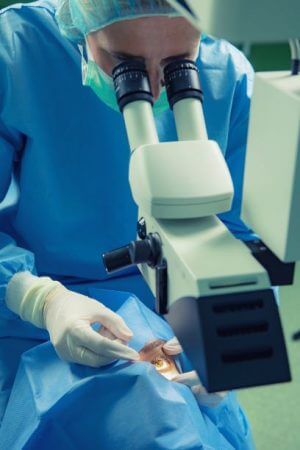
Laser eye surgery to correct astigmatism is a little more complicated than surgery to correct regular vision problems, but it is still a quick procedure. If it’s your cornea that’s impacted, a small incision will be made with a laser so that the full cornea is revealed, and it can then be reshaped with a laser to restore the right curve and therefore your vision.
When you contact a clinic to start the LASIK process, you can first expect a thorough evaluation to make sure you’re a good fit. Before this evaluation, you will be asked not to wear contact lenses for a few days. This is because they can alter the shape of your cornea slightly, and your laser eye surgeon needs to see the full extent of your astigmatism.
During your initial appointment, expect:
- Comprehensive eye exam and medical history review
- Corneal measurements and thickness checks
- Full eye structure scan to assess suitability
- Discussion of your specific astigmatism correction needs
If they determine you’re a suitable candidate, you’ll get your LASIK procedure booked in. On the day, make sure to arrive with no eye makeup on and ensure you have someone to drive you home afterwards. The procedure itself is usually completed in less than half an hour, and you’ll receive numbing eye drops and possibly medicine to help you relax.
After the procedure, you’ll likely be prescribed painkillers and eye drops, and it’s important to follow all the aftercare advice the team gives you for the best healing and optimal results.
At IQ Laser Vision, we would love to help you on your astigmatism correction journey with LASIK. Our experienced team is here to guide you through every step of the process, from initial consultation to full recovery.