



Articles
Eyelid Twitching: Causes, Treatments, and Prevention
Eyelid twitching, also known as myokymia, is a common condition where the eyelid muscles contract involuntarily. While usually harmless and temporary, it can be quite annoying and disruptive. In this post, we will look into the causes of eyelid twitching,…
Read More

Articles
Computer Vision Syndrome: How to Obtain Optimal Eye Health
Conquering Computer Vision Syndrome: Preserving Ocular Health in the Digital Age In our technology-driven world, many people spend hours daily in front of screens. This lifestyle can lead to a common issue known as Computer Vision Syndrome (CVS). Understanding and…
Read More

Articles
The Definitive Guide to Flying After LASIK Surgery
LASIK (Laser-Assisted In Situ Keratomileusis) is a popular vision correction procedure that offers freedom from glasses and contact lenses for many individuals. However, one common concern among patients is whether they can travel or fly after undergoing LASIK surgery. We…
Read More

PRK
Understanding Myopia and the Benefits of Laser Eye Surgery
Understanding Myopia and Laser Eye Surgery Do you know someone grappling with myopia, commonly known as nearsightedness? In North America, nearly one in four individuals experiences this vision issue. Myopia manifests as clear vision for close objects but blurriness for…
Read More
PRK
Understanding Myopia Treatment Options: Clear Vision is Possible
Understanding Myopia Treatment Options Myopia, commonly known as nearsightedness, is a widespread vision condition that affects how light focuses within the eye. In a healthy eye, light rays converge precisely onto the retina, enabling clear vision. However, with myopia, the…
Read More
PRK
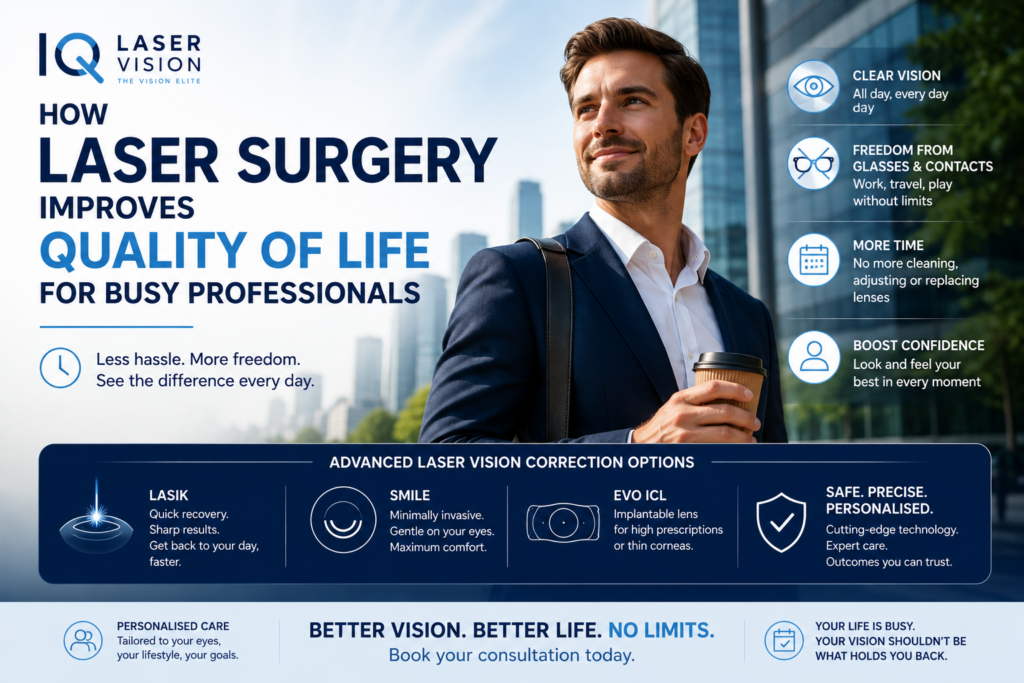
How Laser Surgery Improves Quality of Life for Busy Professionals
Laser eye surgery eliminates the daily inconvenience of glasses and contact lenses, freeing up time and mental energy for busy professionals. Improved vision can directly enhance workplace performance, focus, and confidence. Active professionals benefit significantly, with no need for prescription…
Read More
EVO ICL
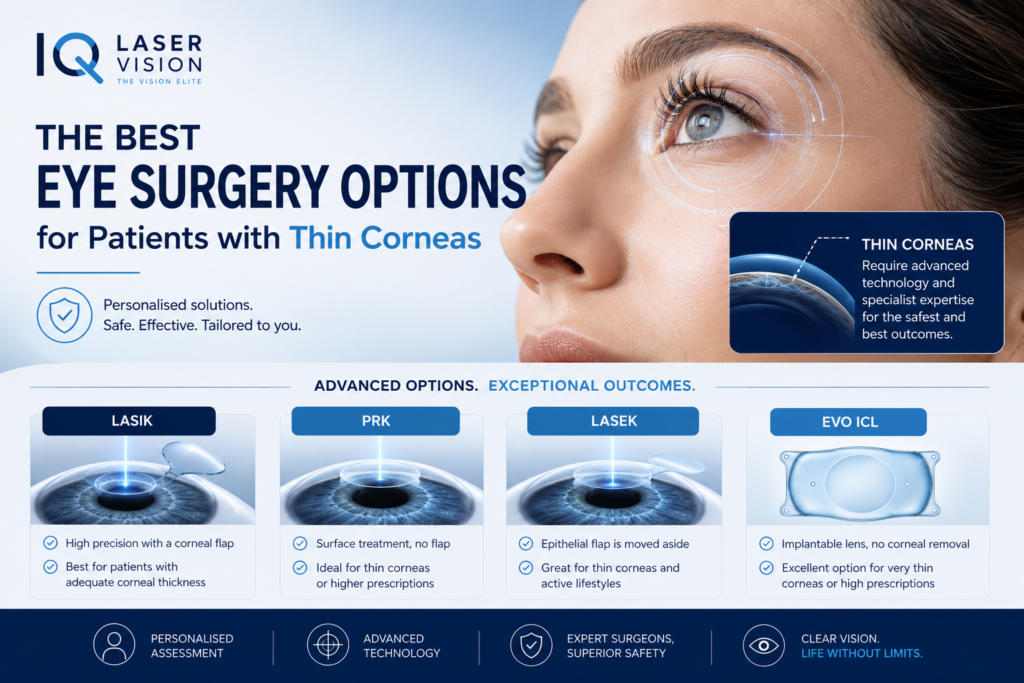
The Best Eye Surgery Options for Patients with Thin Corneas
Corneal thickness is a critical factor in determining candidacy for laser eye surgery, as each procedure requires a minimum amount of tissue to preserve the cornea’s structural integrity. Patients with thin corneas who are not suitable for LASIK may still…
Read More
LASIK
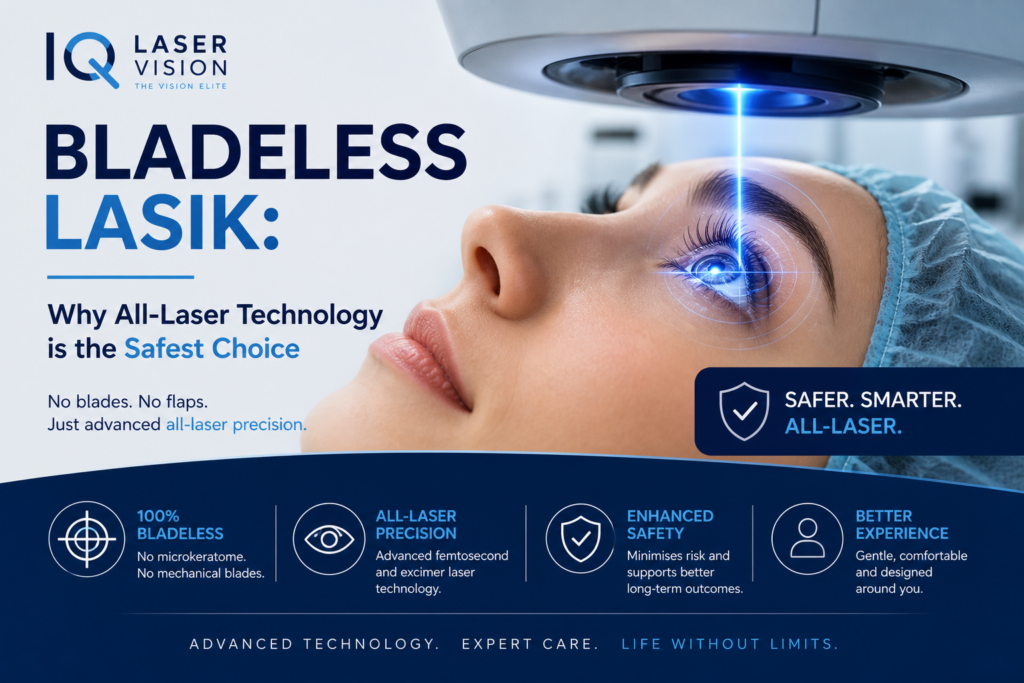
Bladeless LASIK: Why All-Laser Technology is the Safest Choice
Bladeless LASIK, also called all-laser LASIK, replaces the mechanical blade used in traditional LASIK with a femtosecond laser to create the corneal flap. Femtosecond laser technology operates at extraordinarily fast speeds, enabling more precise, predictable, and customisable flap creation than…
Read More
LASIK
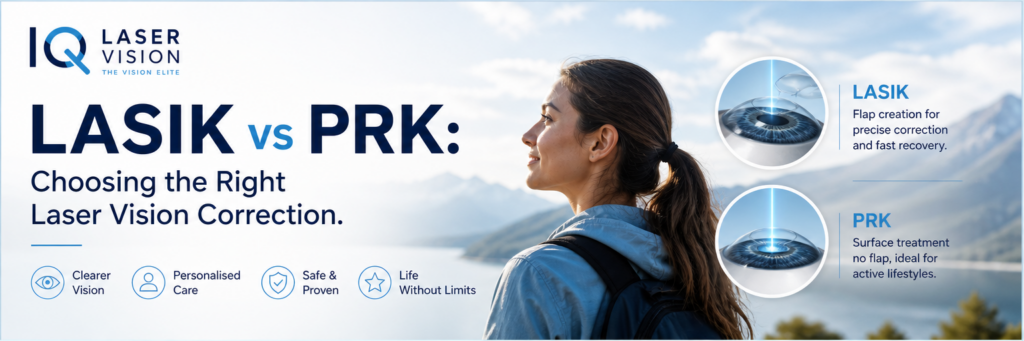
LASIK vs PRK: Choosing the Right Laser Vision Correction
LASIK creates a thin corneal flap to access and reshape the underlying tissue; PRK removes the outer epithelial layer entirely, with no flap created. PRK is often the preferred option for patients with thin corneas, irregular corneal surfaces, or those…
Read More
LASIK
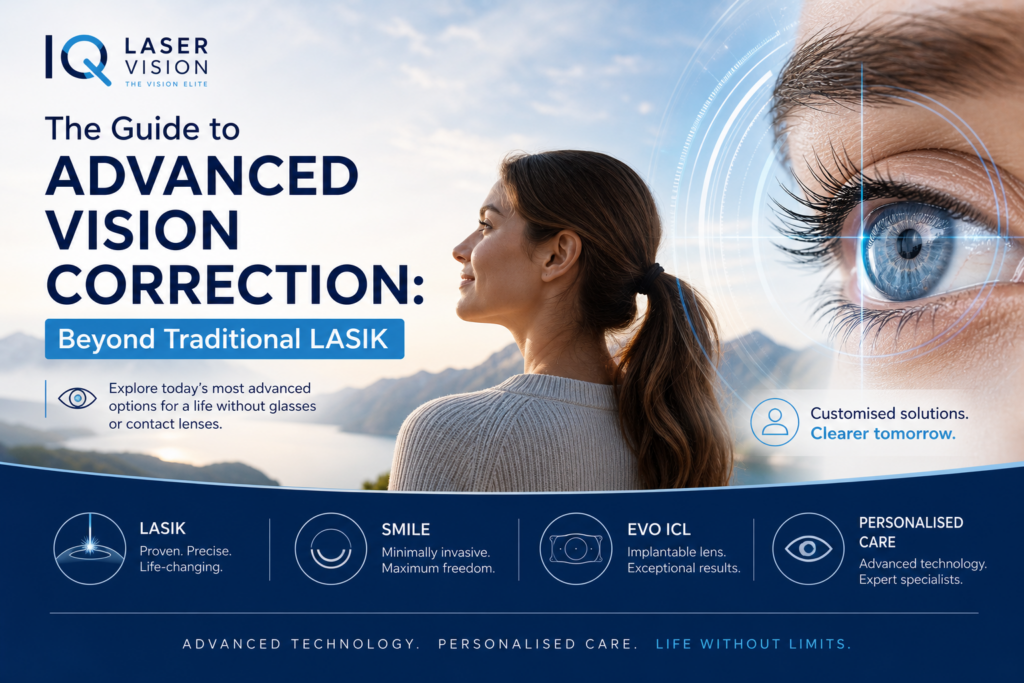
The Guide to Advanced Vision Correction: Beyond Traditional LASIK
Advanced LASIK surgery uses high-resolution eye mapping, femtosecond lasers, and real-time tracking systems to deliver greater precision than traditional LASIK. Modern laser eye surgery procedures include SMILE, Custom Wavefront LASIK, and EVO ICL, each suited to different prescriptions, corneal profiles,…
Read More