- LASIK creates a corneal flap to reshape the eye; SMILE is flap-free, using a tiny incision to remove a lenticule from inside the cornea.
- LASIK treats a broader range of refractive errors including myopia, hyperopia, and astigmatism; SMILE is primarily approved for myopia and mild astigmatism.
- LASIK offers faster initial visual recovery (within hours); SMILE offers a slightly slower but often more comfortable healing process.
- SMILE preserves more corneal nerves, making it a better option for patients prone to dry eyes or those with active lifestyles.
- The right procedure depends on your prescription, corneal thickness, lifestyle, and dry eye history. A comprehensive consultation is essential.
Millions of people are achieving clear eyesight with laser vision correction, eliminating the need for glasses or contact lenses. Two of the most advanced procedures available today are LASIK (Laser-Assisted in Situ Keratomileusis) and SMILE (Small Incision Lenticule Extraction). While both are transformative methods that aim to reshape the cornea and correct refractive errors, they differ significantly in technique, recovery, and patient suitability.
If you’re considering laser eye surgery, understanding the differences between LASIK vs SMILE eye surgery is essential so you can determine which option is right for your eyes and lifestyle.
How SMILE Technology is Changing Vision Correction
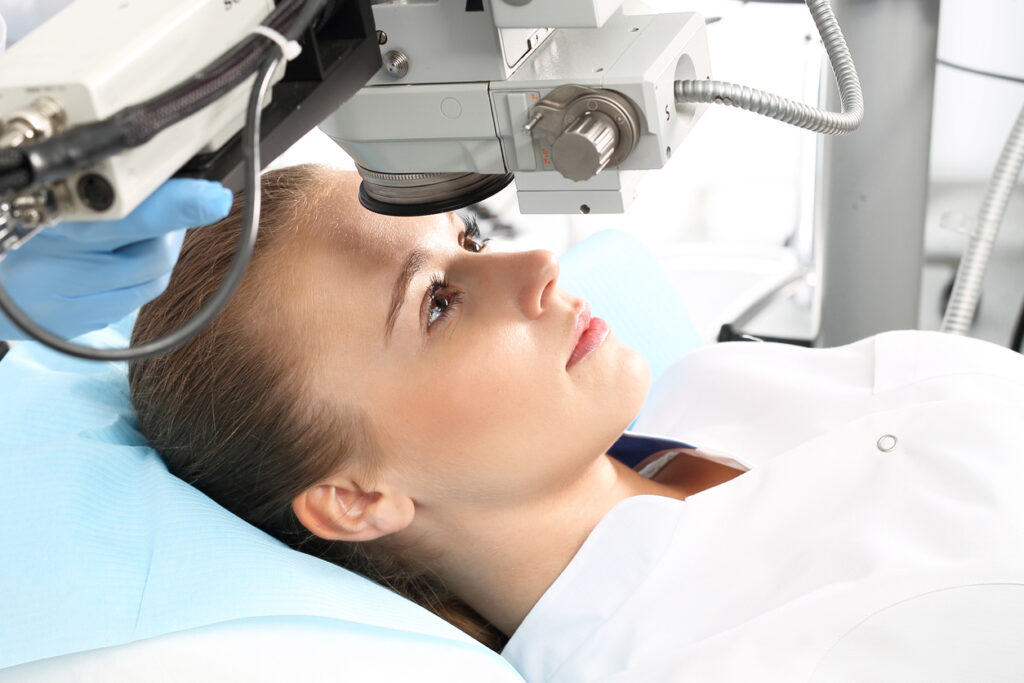
SMILE is a next-generation laser eye surgery that is minimally invasive and entirely flap-free. Rather than cutting a corneal flap as LASIK does, a femtosecond laser is used to create a small, lens-shaped piece of tissue called a lenticule inside the cornea. This lenticule is then removed through a tiny incision of 4mm or less.
What may seem like a subtle difference has significant clinical implications:
- Corneal integrity: Because no flap is created, more of the cornea’s structural strength is preserved.
- Reduced flap risk: For active patients, including athletes and those in contact sports, flap-related complications are eliminated entirely.
- Laser use: SMILE uses only a femtosecond laser, while LASIK requires both a femtosecond laser (to create the flap) and an excimer laser (to reshape the cornea).
SMILE does have limitations. It is primarily used to treat myopia and mild astigmatism, whereas LASIK addresses a broader range of refractive errors including hyperopia. If you’re exploring all available options, you may also want to learn about PRK or EVO ICL as alternative procedures for vision correction.
Overall, SMILE is changing vision correction by offering a less invasive alternative with fewer structural disruptions to the eye, particularly suited to patients with specific lifestyle and corneal considerations.
SMILE vs LASIK: Procedure Comparison Table
| Feature | LASIK | SMILE |
|---|---|---|
| Incision type | Corneal flap (large) | Tiny incision (4mm or less), flap-free |
| Lasers used | Femtosecond + excimer | Femtosecond only |
| Conditions treated | Myopia, hyperopia, astigmatism | Myopia, mild astigmatism |
| Corneal nerve preservation | Lower | Higher |
| Dry eye risk | Moderate (temporary) | Lower |
| Initial visual recovery | Hours | 1 to 2 days |
| Full visual clarity | 24 to 48 hours | Several days |
| Suitable for active lifestyles | With caution | Yes (no flap to displace) |
| Thin cornea suitability | May not be ideal | Often more suitable |
Recovery Comparison: When Can You Return to Normal Activities?
Recovery time is one of the most important factors patients consider when choosing between LASIK and SMILE eye surgery.
LASIK Recovery
- Visual recovery is rapid, with improved vision often noticeable within hours of the procedure.
- Most patients return to normal daily activities within 24 to 48 hours.
- Some patients experience temporary dryness or mild discomfort during the initial healing phase.
SMILE Recovery
- Functional vision is typically achieved within one to two days.
- Optimal visual clarity develops gradually over several days.
- Patients generally report less irritation and a more comfortable healing experience compared to LASIK.
Despite these differences, both procedures are minimally disruptive to daily life. Most patients can resume light activities such as watching television or using a computer shortly after surgery. Eye rubbing should be avoided, and any prescribed medication should be taken as directed to support a smooth recovery.
In summary: LASIK offers faster initial visual recovery, while SMILE tends to provide a slightly slower but more comfortable healing experience overall.
Are You a Candidate for SMILE or LASIK?
Not every patient is suitable for both procedures. A comprehensive eye examination is essential to determine candidacy. You can get started with our vision correction self-test to assess your initial eligibility.
LASIK Candidacy
LASIK is the more versatile of the two procedures, treating a wider range of refractive errors including near-sightedness (myopia), farsightedness (hyperopia), and astigmatism. General requirements include:
- Age 18 or older
- A stable prescription for at least 12 months
- Adequate corneal thickness
- Generally healthy eyes
SMILE Candidacy
SMILE is more specialized and is primarily approved for patients with myopia and certain levels of astigmatism. However, it may be the preferred option for patients who:
- Have thin corneas that may not support a LASIK flap
- Have a history of or are prone to dry eyes
- Participate in contact sports or have physically demanding occupations
How Lifestyle Influences Your Choice
- If you are an athlete or work in a physically demanding field, SMILE may be preferable due to its flap-free design.
- If you require the fastest possible visual recovery, LASIK may be the better fit.
- If you have a complex or wide-ranging prescription, LASIK is likely the more suitable option.
Ultimately, candidacy is highly individualized. An experienced ophthalmologist will evaluate your corneal shape, prescription, eye health history, and lifestyle before making a recommendation.
SMILE vs LASIK: Which Offers Better Results for Dry Eyes?
Dry eye syndrome is a common concern among patients considering laser vision correction, and the two procedures handle it quite differently.
LASIK and Dry Eyes
- The creation of the corneal flap temporarily disrupts corneal nerves, which can reduce tear production.
- Patients may experience dryness and discomfort in the first few months following surgery, which typically improves over time.
SMILE and Dry Eyes
- The smaller incision preserves significantly more corneal nerves, resulting in less disruption to the eye’s natural tear film.
- Patients generally report fewer and less severe dry eye symptoms post-procedure.
- Corneal sensitivity tends to recover more quickly, with improved tear film stability compared to LASIK.
It is important to note that both procedures can cause temporary dryness. If you have a pre-existing dry eye condition, thorough screening is critical, and you may require specialized treatment regardless of which procedure you undergo. For further clinical guidance on dry eye disease, the American Academy of Ophthalmology provides trusted patient resources.
In summary: SMILE is generally the preferred option for patients concerned about dry eyes, while LASIK remains a safe and effective alternative for those without significant dry eye risk.
Correct Your Vision at IQ Laser Vision
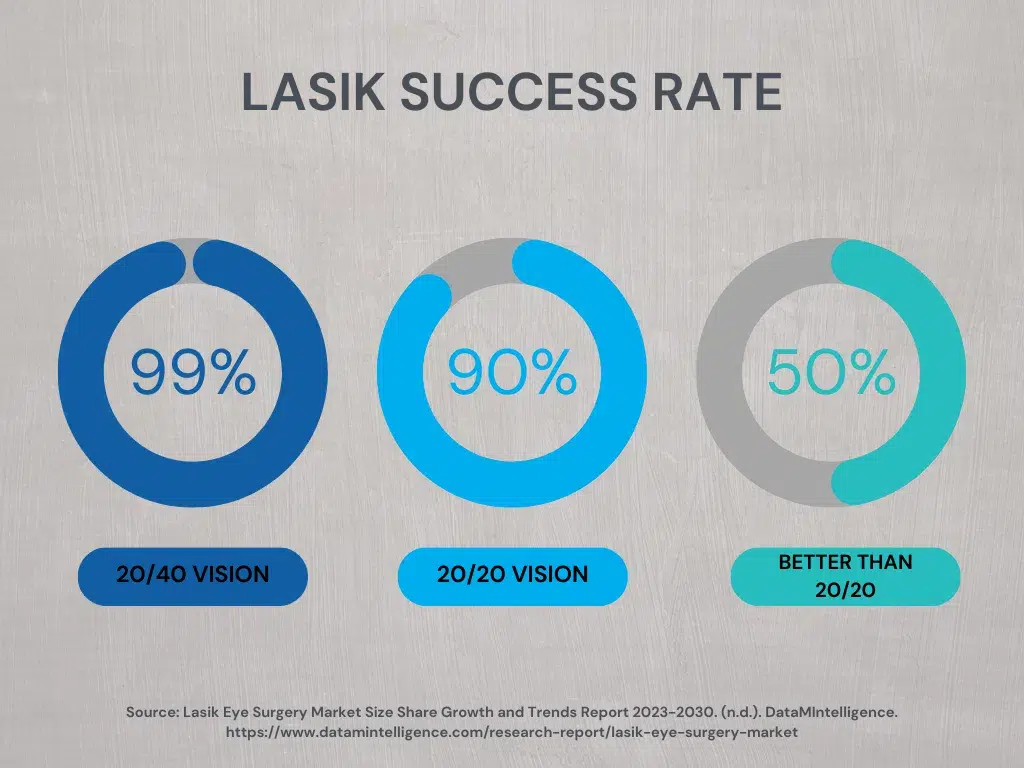
At IQ Laser Vision, we offer safe, highly effective LASIK and SMILE procedures designed to significantly improve your vision and quality of life. Rather than recommending a single “better” procedure, our focus is on determining which option is best suited to you specifically, based on factors such as corneal shape, prescription complexity, recovery goals, and dry eye risk.
Your personalized consultation with one of our expert eye care professionals will assess whether SMILE, the minimally invasive flap-free alternative, or LASIK, the more versatile and time-tested option, is the right fit for your circumstances. You can also explore real patient testimonials to hear about the experiences of others who have undergone vision correction with our team.
If you’re considering laser eye surgery, contact IQ Laser Vision today and take the first step toward visual freedom.
Frequently Asked Questions: LASIK vs SMILE Eye Surgery
What is the main difference between LASIK and SMILE eye surgery?
The primary difference lies in technique. LASIK involves creating a thin corneal flap before reshaping the eye with an excimer laser. SMILE is a flap-free procedure that uses only a femtosecond laser to create a small lenticule inside the cornea, which is removed through a tiny incision. SMILE preserves more of the cornea’s structural integrity and is associated with fewer dry eye symptoms.
Which procedure has a faster recovery: LASIK or SMILE?
LASIK generally offers faster initial visual recovery, with many patients noticing improved vision within hours and returning to normal activities within 24 to 48 hours. SMILE has a slightly more gradual recovery, with functional vision typically achieved within one to two days and optimal clarity developing over several days. However, SMILE patients often report a more comfortable healing experience.
Is SMILE better than LASIK for dry eyes?
For patients concerned about dry eyes, SMILE is generally considered the better option. Because SMILE does not create a corneal flap, it preserves more corneal nerves and causes less disruption to the tear film. LASIK can temporarily reduce tear production due to nerve disruption from the flap creation, which may cause dryness in the months following surgery.
Can everyone choose between LASIK and SMILE?
No. Not all patients are candidates for both procedures. LASIK treats a broader range of refractive errors, including hyperopia, making it more widely applicable. SMILE is primarily suited to patients with myopia and mild astigmatism. Factors such as corneal thickness, prescription range, dry eye history, and lifestyle all influence which procedure is appropriate. A comprehensive eye examination and consultation with an ophthalmologist is required to determine the right option for you.